


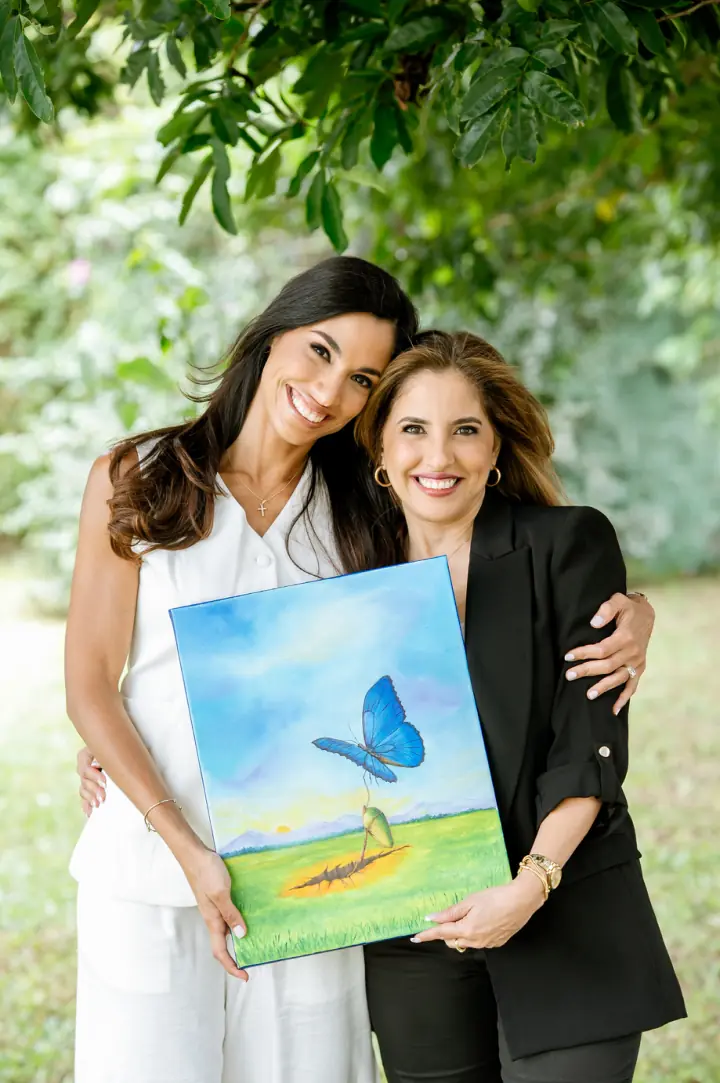
Josymar and Margarita Chacín, the book’s authors, smiling in a garden.
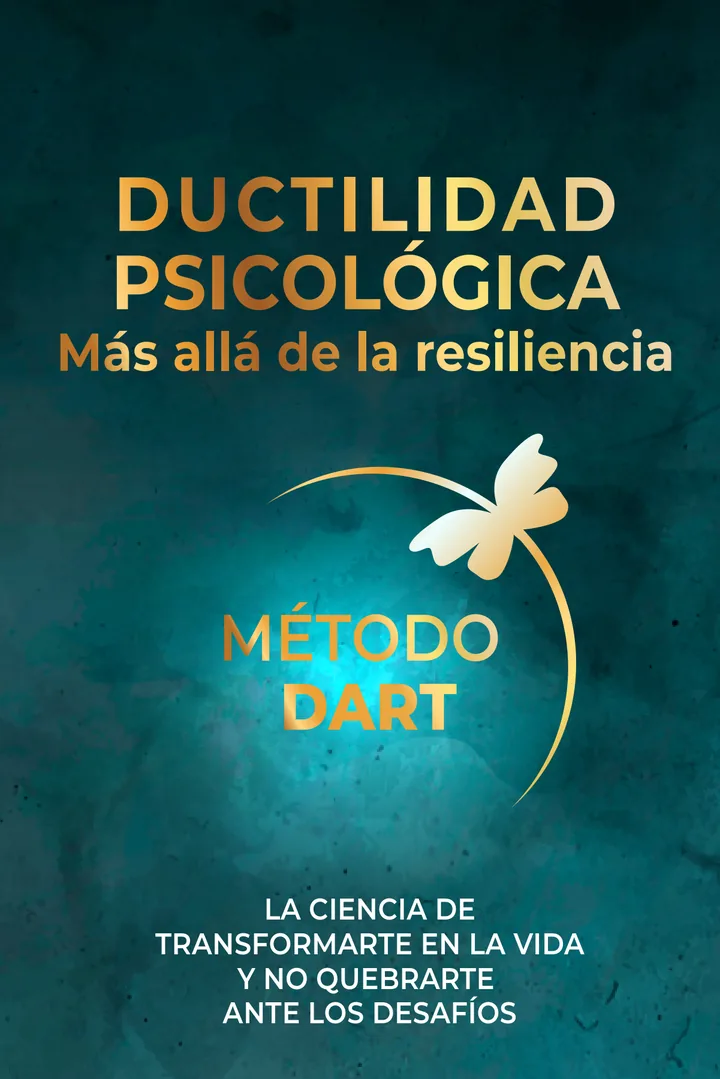
Cover of the book Ductilidad psicológica. Más allá de la resiliencia. Método DART.

Book · DART Method

Learn to transform yourself without losing your essence

Ductilidad psicológica. Más allá de la resiliencia (Psychological Ductility: Beyond Resilience) is the book by psychologists Josymar and Margarita Chacín. Their DART Method offers four steps to move through change and uncertainty with flexibility and purpose. Currently available in Spanish.

Prefer to start with practice? Listen to a guided meditation

  • +5 decades of clinical, organisational and academic experience
  • +15 countries across their professional careers
  • UK and Latin America university teaching and research

The idea

It’s not about going back. It’s about transforming.

What if pain were not the end of the road, but the beginning of a deeper transformation?

  1. In materials physics

    Resilience

    It deforms… and returns to its shape.

    The word resilience comes from physics: it describes how a material deforms under pressure and then returns to its original shape. Psychology adopted it to name our ability to go through hardship, recover and keep going.

  2. In materials physics

    Ductility

    It changes shape… without breaking.

    Physics also speaks of ductility: when pressure exceeds a certain threshold, some materials change shape permanently, without breaking.

  3. In psychology

    We are not always who we used to be.

    Josymar and Margarita Chacín bring that idea to people’s lives, because some experiences leave a mark, and afterwards we are not always who we used to be.

  4. In psychology

    Psychological ductility

    “A person’s capacity to face emotional, physical or contextual challenges while maintaining a mental plasticity that allows them to learn, evolve and transform with purpose.”

    The authors’ definition of psychological ductility (translated)
  5. Resilience and ductility

    One sustains us. The other reinvents us.

    The authors do not present ductility as a rival to resilience: they see resilience as a valuable first step and propose going further, towards conscious transformation.

When can this perspective help?

  1. A personal change you didn’t choose

    A loss, a separation, a migration or a diagnosis can change the shape of your life. The book invites you to look at that change without denying the pain.

  2. Uncertainty at work

    A new role, a restructuring or a project coming to an end. The method is also used with leaders and teams.

  3. A difficult decision

    When going back is no longer possible or desirable, the question changes: what do you want to build with what you have lived through?

The method

DART: a four-step cycle you can return to

DART is the authors’ proposal for developing psychological ductility. It is not a recipe or a rigid sequence: it is a cycle you can return to as often as you need. As in a game of darts, it is about observing, adjusting and trying again.

Step 1

Conscious Detachment

Letting go, with intention, of what no longer nourishes you: beliefs, relationships, habits or guilt. Detachment does not mean loving less or giving up what you value; letting go can also be an act of self-care.

Guiding question What do I need to let go of to move forward?

To go deeper: “Which part of you are you staying loyal to, even though it no longer does you good?” (book, p. 224, translated)

Go to the Conscious Detachment meditation

Step 2

Acceptance

Seeing reality as it is, without denial or judgement. Accepting is not resigning yourself: it is opening up to learning and finding meaning even in what hurts.

Guiding question Can I look at what hurts without judgement?

To go deeper: “What is there in you right now that you find hard to accept?” (book, p. 239, translated)

Go to the Acceptance meditation

Step 3

Reconnection with Purpose

Coming back to yourself: identifying your values, your deepest motivation and what moves you and gives meaning to your decisions.

Guiding question What meaning do I want to give this experience?

To go deeper: “What kind of person do I want to be, even when things are difficult?” (book, p. 274, translated)

Go to the Reconnection with Purpose meditation

Step 4

Active Transformation

Putting what you have learned into practice: making conscious decisions and starting real, sustainable changes. Turning rupture into construction and pain into growth.

Guiding question What actions can I take from this new awareness?

To go deeper: “Which part of me is being invited to grow through this experience?” (book, p. 285, translated)

Go to the Active Transformation meditation

Each step is explained in the book with examples, foundations and practical exercises. The questions are an invitation to reflect, not a test or a diagnosis.

Buy the book (opens Amazon in a new tab)
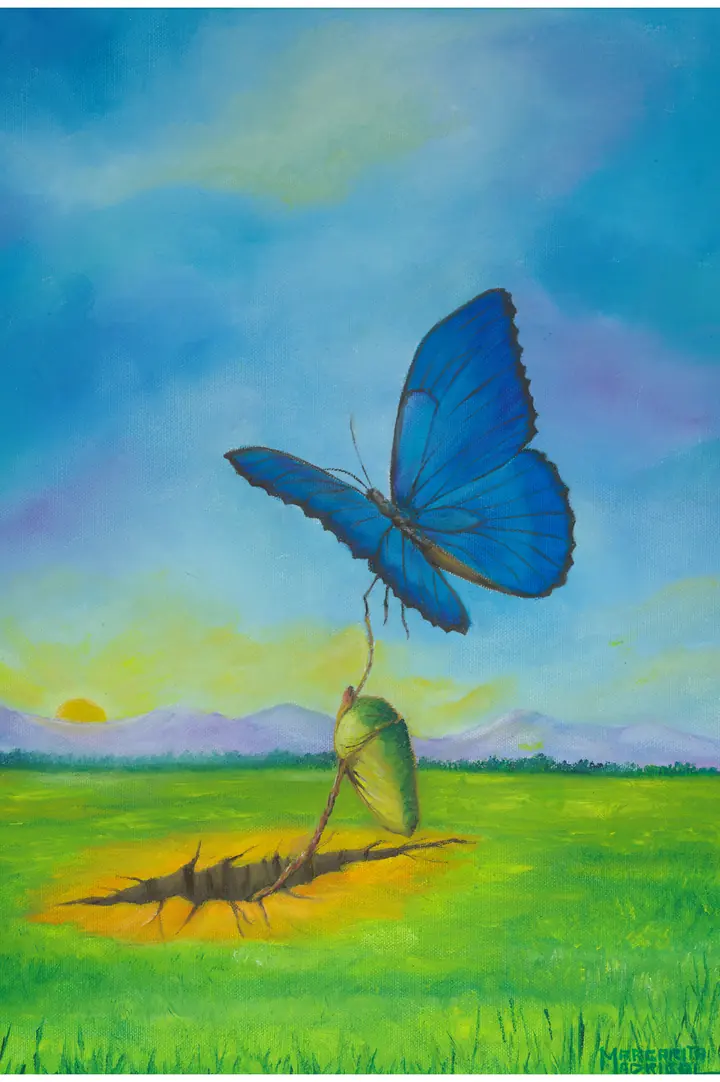
Painting of a blue butterfly emerging from its cocoon.

DART for individuals

When life changes shape

Grief, illness, divorce, migration, an existential crisis… or simply the wish to live with more purpose. DART walks with you step by step, at your own pace.

  1. D: Let go with intention

    Identify beliefs, relationships, habits or guilt that no longer nourish you, and give yourself permission to let them go.

    What do I need to let go of to move forward?

  2. A: Look without judgement

    Acknowledge what you are going through, including what hurts, without denying it or punishing yourself for feeling it.

    Can I look at what hurts without judgement?

  3. R: Return to what matters

    Reconnect with your values and with what gives meaning to your decisions.

    What meaning do I want to give this experience?

  4. T: Take the next step

    Turn what you have learned into concrete, sustainable decisions, however small.

    What actions can I take from this new awareness?

DART for organizations

From resilient leadership to ductile leadership

Teams go through change too: restructuring, crises, losses and new ways of working. DART offers a shared language so that leaders and teams can adapt with purpose, without breaking.

Talks, workshops and ductile leadership programmes for executive teams, managers, middle management and HR. Josymar Chacín is Associate Director of Avantem Latam, a firm that promotes wellbeing in organizations across Latin America.

Write to us to bring DART to your team

  1. D: Let go of what no longer works

    Review practices, structures and leadership styles that served at another time but now hold the team back.

    What do we need to let go of as a team to move forward?

  2. A: See reality as it is

    Honestly acknowledge the situation of the team and its environment, without denying it or looking for someone to blame.

    Can we look at what hurts without judgement?

  3. R: Reconnect with purpose

    Return to the shared values and purpose that guide decisions.

    What meaning do we want to give this experience?

  4. T: Turn it into action

    Turn what has been learned into concrete agreements and actions that care for both people and results.

    What actions can we take from this new awareness?

The book

Ductilidad psicológica. Más allá de la resiliencia

Psychological Ductility: Beyond Resilience — The Science of Transforming Your Life Without Breaking Under Pressure

Leaf through a few pages of the Spanish edition: scroll or use the buttons to turn them.

  1. Cover of the book Ductilidad psicológica. Más allá de la resiliencia. Método DART.
  2. Painting of a blue butterfly emerging from its cocoon.
  3. Title page: Dr Josymar Chacín and Dr Margarita Chacín. Ductilidad psicológica. Más allá de la resiliencia. Método DART.
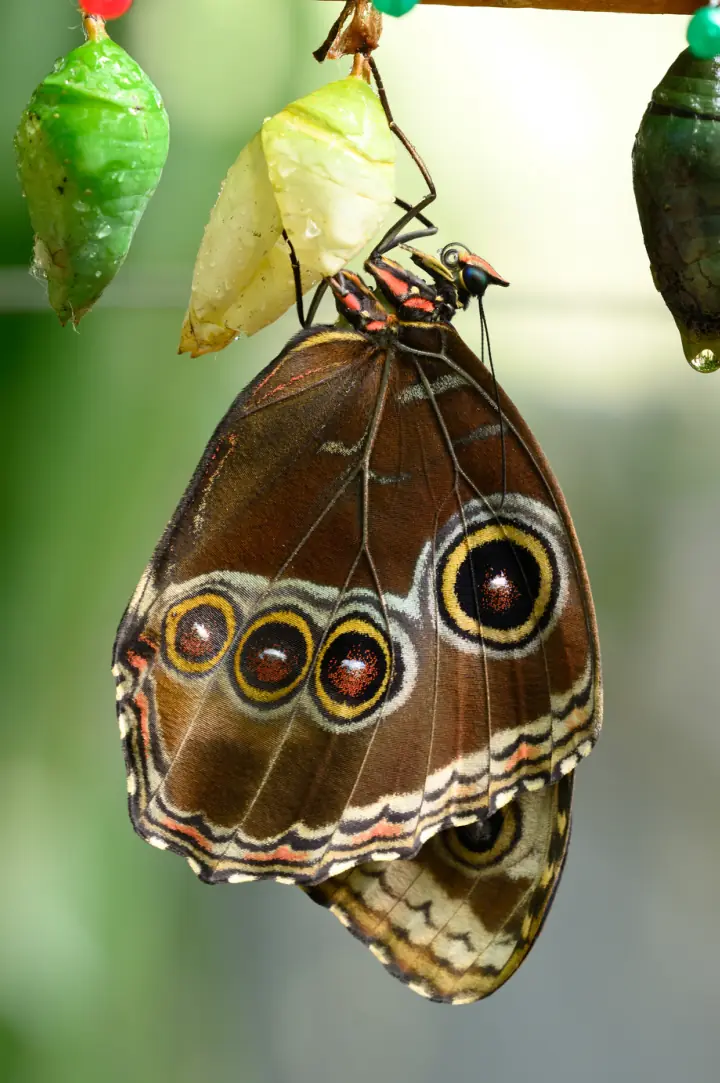
  4. Photograph of a butterfly that has just emerged from its chrysalis.
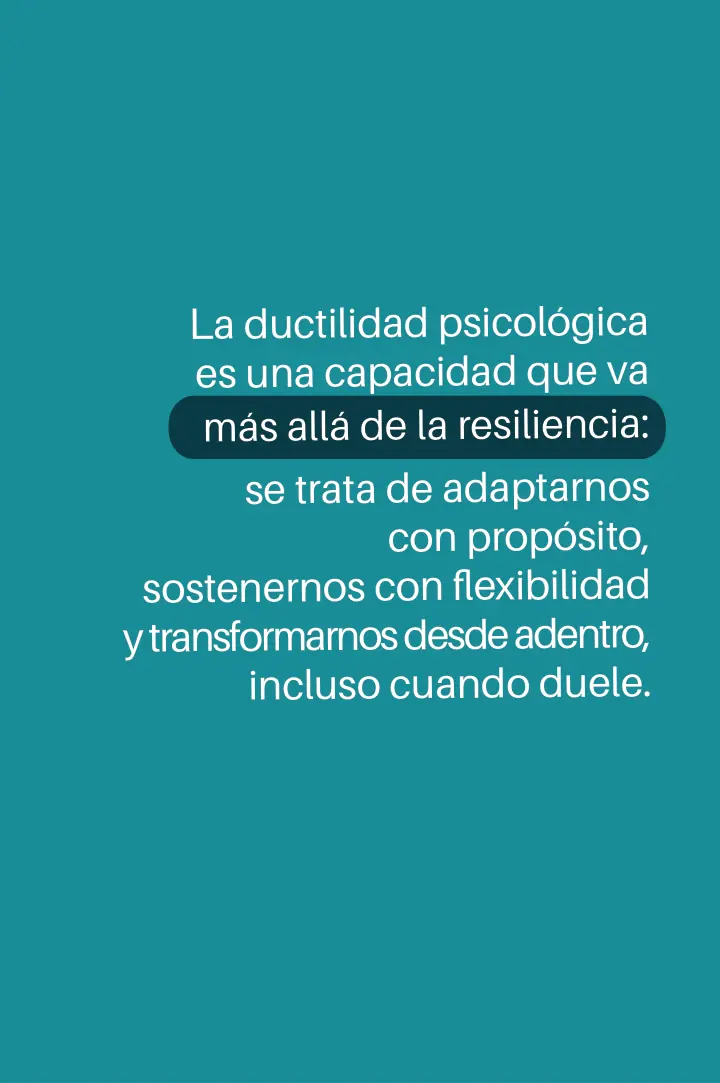
  5. Page 11, in Spanish: “Psychological ductility is a capacity that goes beyond resilience: it is about adapting with purpose, holding ourselves with flexibility and transforming from within, even when it hurts.”
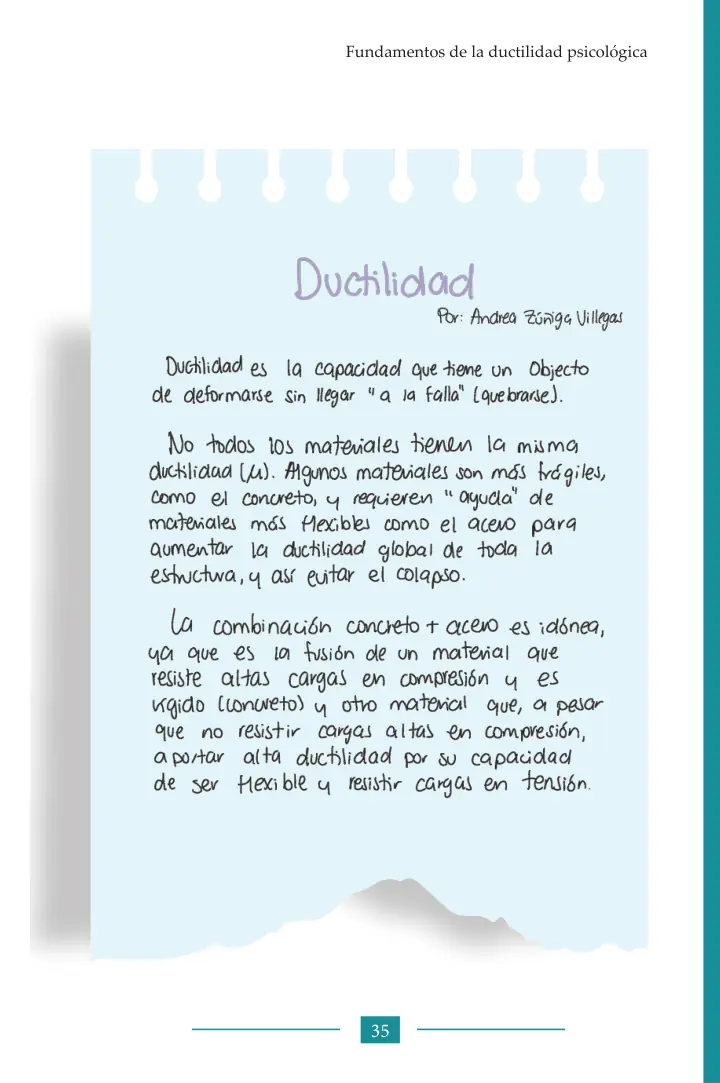
  6. Page 35: handwritten notes titled “Ductilidad” by Andrea Zúñiga Villegas, on the ductility of concrete and steel.
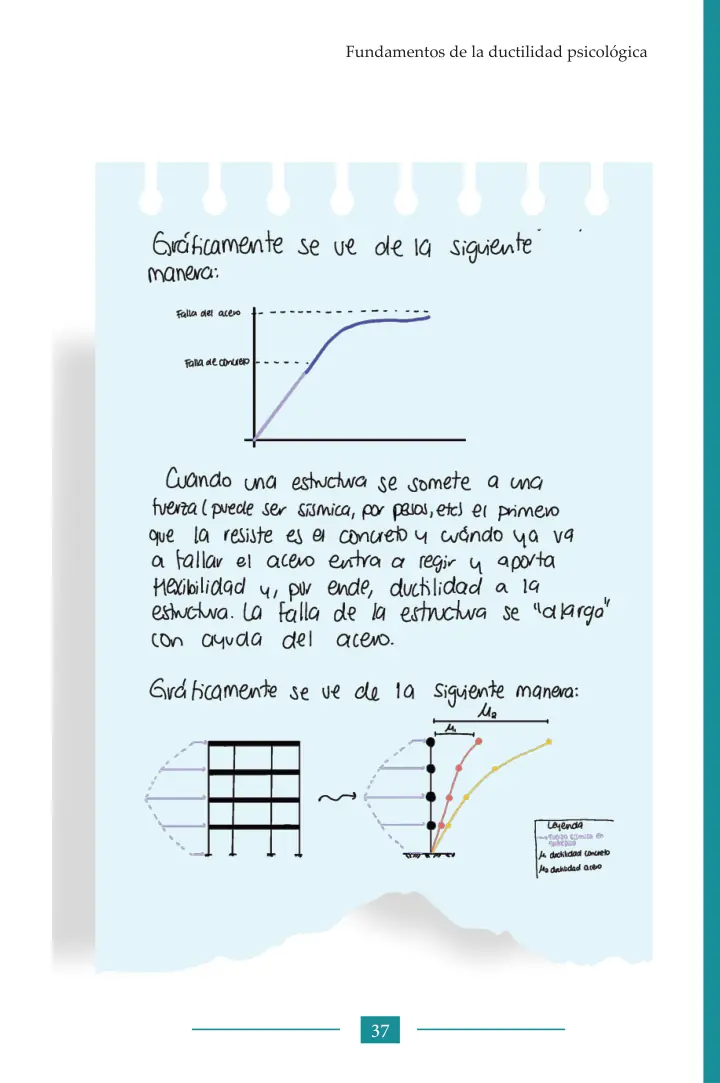
  7. Page 37: the notes continue, with a graph of how concrete and steel fail.
  8. Photograph of a person leaping between two rocks at sunset.
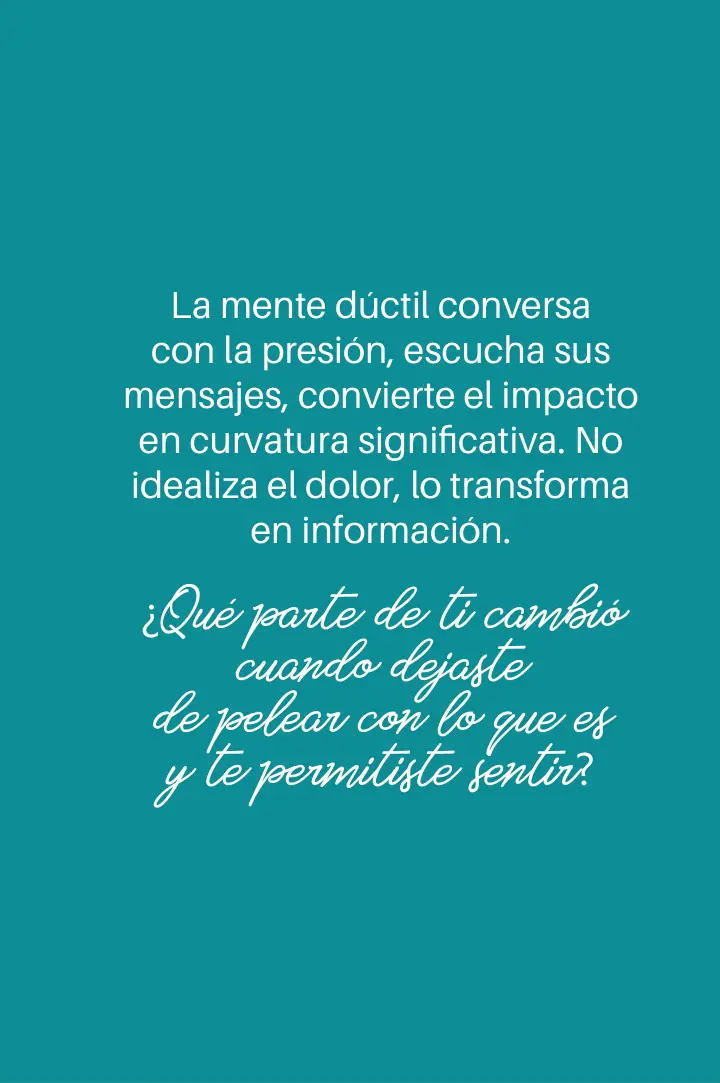
  9. Page 47, in Spanish: “The ductile mind converses with pressure, listens to its messages and turns impact into meaningful curvature. It does not idealise pain; it turns it into information.”
  10. Photograph of a dart in the centre of a dartboard.
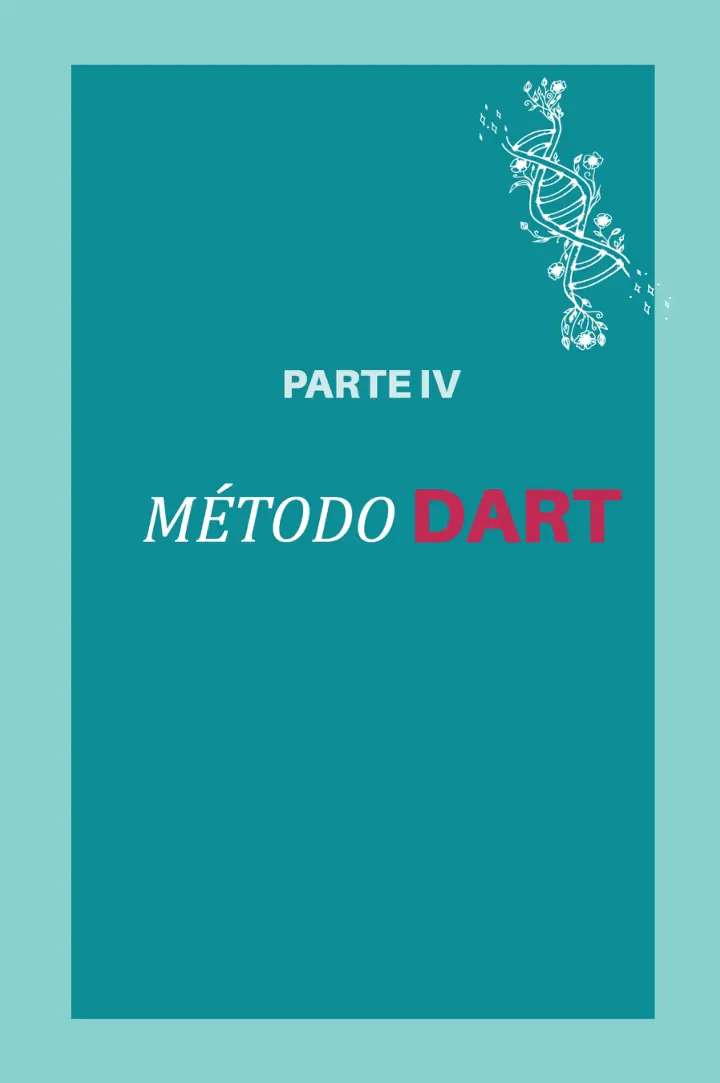
  11. Page 199: Part IV. The DART Method.
  12. Photograph of open hands releasing a butterfly.
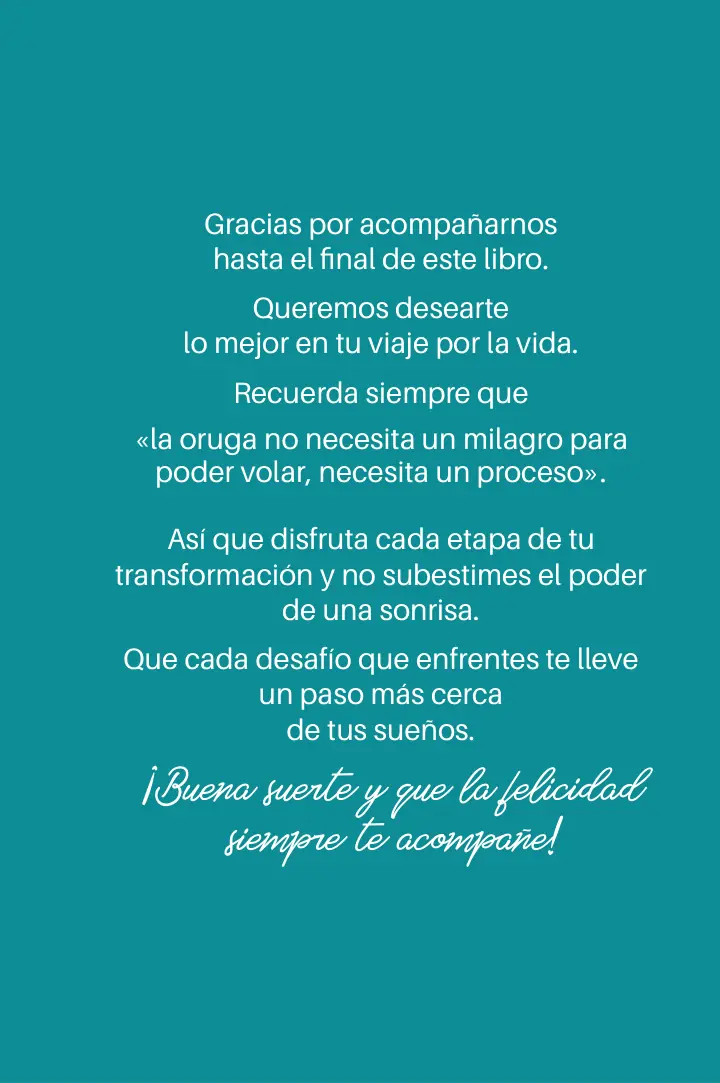
  13. Page 309, in Spanish: “Thank you for staying with us to the end of this book. We wish you all the best on your journey through life. Always remember that ‘the caterpillar doesn’t need a miracle to fly, it needs a process’.”
  14. Page 310: Josymar and Margarita Chacín embracing, holding the painting of the blue butterfly.
  15. The story continues in the book

    Buy on Amazon (opens in a new tab)

An integrative approach for people facing a crisis, going through a transition or wishing to deepen their own process of transformation. Through powerful metaphors, clinical reflections, real stories and the DART Method — a four-step route to activate your mental plasticity — the authors help you rediscover your inner strength: the kind that transforms but does not break.

Currently available in Spanish.

You weren’t born to stay in the cocoon. This book is an invitation to spread your wings.

Who it’s for

  • People going through grief, illness, divorce, migration or an existential crisis.
  • Those who wish to live with purpose and grow consciously.
  • Psychologists, counsellors and health professionals looking for a clear methodology or a complement to therapy.
  • Leaders and teams facing uncertainty.

What’s inside

  1. I Foundations of psychological ductility
  2. II Mindset styles: rigid, elastic and ductile
  3. III Psychological architecture: plasticity, childhood, life experiences and breaking point
  4. IV The DART Method, with exercises, guided meditations and examples
Buy on Amazon (opens in a new tab)

On Amazon you can check the available editions (in Spanish), the price and shipping to your country.

Josymar and Margarita Chacín

Sisters, psychologists and companions in human processes, with more than five decades of combined clinical, organisational and academic experience. In their practice they asked themselves a question: after great pressure, do people really go back to being who they were? The answer they found most often was no: most people transform.

Josymar and Margarita Chacín sitting back to back on the grass in a garden.
Portrait of Josymar Chacín next to a tree.

Dr Josymar Chacín

Psychologist · Doctorate in Human Sciences

LinkedIn profile of Josymar Chacín (new tab)

Psychologist with a Doctorate in Human Sciences and a Master’s degree in Clinical and Health Psychology. She specialises in Psychoneuroimmunology and Corporate Wellbeing, and brings over 30 years of experience across clinical, health and organisational settings. International speaker and Associate Director of Avantem Latam in Costa Rica.

  • Doctorate in Human Sciences, Universidad del Zulia (Venezuela)
  • Master’s in Clinical and Health Psychology, Instituto Superior de Estudios Psicológicos (Spain)
  • Accredited by the Colegio de Psicólogos de Costa Rica
  • Honorary doctorates (honoris causa): Instituto Cosvic (Costa Rica) and SIISDET (Colombia)

Dr Josymar Chacín graduated in Psychology from Universidad Rafael Urdaneta (Venezuela), with her degree recognised by the Universidad de Costa Rica. She is accredited by the Colegio de Psicólogos de Costa Rica.

She holds a Doctorate in Human Sciences with an emphasis on Psychoneuroimmunology from Universidad del Zulia (Venezuela), as well as two honorary doctorates: one awarded by Instituto Cosvic (Costa Rica) and one in Health awarded by the Sociedad Internacional en Investigación, Salud, Desarrollo Empresarial y Tecnologías (SIISDET, Colombia), where she was also named Dama de la Salud.

She holds a Master’s in Clinical and Health Psychology from the Instituto Superior de Estudios Psicológicos (Spain) and is a Specialist in Health Psychology from the Pontifícia Universidade Católica de São Paulo (Brazil). She also holds a Diploma in Organisational Wellbeing from The George Washington University School of Business and ADEN Business School.

She is a guest lecturer at INCAE Business School in the Management with Leadership programme, and director and lecturer of the Diploma in Psychoneuroimmunology at Universidad de Los Andes. She works as a psychotherapist endorsed by Universidad Albert Ellis (New York) and Universidad de Flores (Argentina). She also holds an International Professional Coach Certification endorsed by the International Coach Federation (ICF) and a Conscious Business Coaching Certification from the Conscious Business Center International.

Early in her career she founded and coordinated the Psychology Unit at the Hospital de Especialidades Pediátricas in Venezuela, working with the Paediatric Oncology and Palliative Care teams. There she developed grief-support programmes for patients and families, including Castillos en el cielo, for children, and Camino a la luz, for adults.

Her publications include scientific articles and collective works in psychoneuroimmunology, health psychology and palliative care. She is the author of a study published in Health Psychology Open (England) on the effects of psychoneuroimmunological intervention in children with leukaemia; of the children’s story Una batalla ganada. Mi lucha contra la leucemia; and co-author of works such as the Manual de Cuidados Paliativos para el Primer Nivel de Atención, among others.

She created the SEIN programme (Salud Empresarial Inmunocompetente) and has served as president of the Venezuelan Society of Psychoneuroimmunology and of the Latin American Federation of Psychoneuroimmunology. She has received the Award for the Best and Most Outstanding Professional in Health Sciences (SIISDET, Colombia) and the international recognition Maximum Leader of Excellence in Health, granted by the World Association for Excellence in Health (AMES).

She is currently president and managing partner of Avantem (Costa Rica) and of Organización Metas (Venezuela). With more than 30 years of professional experience, she has worked as a consultant, lecturer, researcher and speaker in more than 15 countries, standing out for her ability to integrate science, mental health and organisational wellbeing. Her work has left its mark in clinical, educational and business settings, driving processes of cultural transformation, conscious leadership and human development. Her approach seeks to build healthier, immunocompetent and psychologically ductile organisations and people.


Portrait of Margarita Chacín next to a tree.

Dr Margarita Chacín

Clinical and Health Psychologist · Doctorate in Psychotherapy

LinkedIn profile of Margarita Chacín (new tab)

Clinical and Health Psychologist. Senior Lecturer and Researcher in the United Kingdom. She holds a Doctorate in Psychotherapy and has over 18 years of experience across hospital and independent practice. Founder of Horley Psychology, she is an international speaker and author of several peer-reviewed articles and book chapters in psychology.

  • Doctorate in Psychotherapy, Metanoia Institute / Middlesex University (UK)
  • Registered with the Health and Care Professions Council (HCPC, England)
  • Associate Fellow of the British Psychological Society (BPS)
  • Senior Lecturer, Metanoia Institute (London)

Dr Margarita Chacín is a Clinical and Health Psychologist registered with the Health and Care Professions Council (HCPC, England) and recognised as an Associate Fellow of the British Psychological Society (BPS), a distinction reserved for professionals with an established career and significant contributions to the field of psychology.

She graduated summa cum laude in Psychology from Universidad Rafael Urdaneta (Venezuela), completed a Master’s in Clinical and Health Psychology at the Instituto Superior de Estudios Psicológicos (Spain) and obtained a Doctorate in Psychotherapy from the Metanoia Institute/Middlesex University (United Kingdom).

She has more than 18 years of experience supporting complex human processes in contexts of grief, trauma, chronic illness, emotional health and palliative care. She has worked in hospitals, universities and private practice in Latin America and Europe. She is the founder of Horley Psychology (England) and of Organización Metas (Venezuela).

She is currently a Senior Lecturer on the Doctorate in Counselling Psychology and Psychotherapy at the Metanoia Institute (London), where she also sits on the academic teaching and quality committee and works as a clinical and research supervisor.

Throughout her career she has led clinical and research projects in areas such as psychoneuroimmunology, chronic pain, men’s health, fatherhood and psychological support in cancer and palliative care. She has published numerous scientific articles and book chapters in clinical psychology, psychotherapy and integrative health, and is known for an integrative, relational and deeply human perspective.

She is the creator of the psychological ductility approach, an innovative therapeutic proposal that promotes sustainable processes of inner transformation and meaningful adaptation in the face of adversity. In her clinical practice she integrates models such as Acceptance and Commitment Therapy (ACT), compassion-focused therapy, existential thinking and the relational-integrative approach.

She firmly believes that suffering, when accompanied with ethical presence, awareness and meaning, can become a gateway to a more authentic and fulfilling life. Her work combines science, clinical sensitivity and lived experience, and is oriented towards cultivating a way of being that is more ductile, more human and more aligned with what truly matters.

Full biographies translated from Spanish.

Meditations of the DART Method

Four practices created by the authors to accompany each step of the method — a space to pause, breathe and put into practice what you learned in the book. The meditations are in Spanish.

  1. Conscious Detachment A practice to let go of what you no longer need and make inner space for the new. Written version in the book, p. 225 Listen on YouTube: Conscious Detachment (new tab)
  2. Acceptance To embrace reality as it is, without judgement, with openness and serenity. Written version in the book, p. 239 Listen on YouTube: Acceptance (new tab)
  3. Reconnection with Purpose A guided exercise to return to your centre, remember your purpose and align with it. Written version in the book, p. 272 Listen on YouTube: Reconnection with Purpose (new tab)
  4. Active Transformation To spark conscious action, grow and unfold your potential. Written version in the book, p. 286 Listen on YouTube: Active Transformation (new tab)

Background video: James Cheney on Pexels (new tab).

What people say about the book

In these pages, Josymar and Margarita Chacín invite us to move beyond a deeply rooted concept such as resilience and to enter into psychological ductility: an innovative proposal that allows us to understand the mind as a living, dynamic system capable of transforming itself through experience and conscious awareness.

A valuable contribution for those seeking rigorous and profound tools that are, at the same time, transformative for their lives and professional practice.

Ismael Cala

It helped me understand that it is not just about resisting, but about transforming what we live through. A valuable read for any stage of life.

Alicia · Colombia (translated from Spanish)

A valuable read for growing with resilience and awareness. I recommend it.

Natalia · Costa Rica (translated from Spanish)
Cover of the book Ductilidad psicológica. Más allá de la resiliencia.

Ductilidad psicológica · Más allá de la resiliencia

Now available on Amazon

Buy the book (opens Amazon in a new tab)

Dr Josymar Chacín · Dr Margarita Chacín

Margarita and Josymar Chacín embracing, holding the painting of a blue butterfly emerging from its cocoon.

Join the DART Method community

Share your story of ductility, follow the latest news and listen to the meditations on our channels.

Write to us

A question about the book, the DART Method or the meditations? Would you like to bring DART to your organization?

info@psychologicalductility.com

Send an email

Please do not share clinical or sensitive personal information through this channel.

Frequently asked questions

What is psychological ductility?

It is the capacity to face emotional, physical or contextual challenges while maintaining a mental plasticity that allows you to learn, evolve and transform with purpose. The authors take the idea from materials physics: a ductile material changes shape without breaking.

Does it replace resilience?

No. The authors see resilience as a valuable capacity for getting through hardship and recovering. Ductility proposes going one step further: not just returning to how we were, but transforming through what we have lived.

Do the DART steps have to be followed in order?

Not necessarily. The book presents DART as a cycle, not a linear sequence: you can return to any step whenever you need and adapt it to your own pace.

Do you work with companies and organizations?

Yes. The authors bring the DART Method to organizations through talks, workshops and ductile leadership programmes. Write to info@psychologicalductility.com to learn about formats and availability.

Do the book or the meditations replace therapy?

No. They are information and learning resources. The book is also designed for psychologists and health professionals to use as support or as a complement to therapy, but it does not replace professional care.

If you are going through a crisis or feel your life is in danger, contact your country’s emergency services immediately.

Is the book available in English?

The book is currently published in Spanish, and the guided meditations are also in Spanish.

How do I use the meditations?

Each meditation accompanies one DART step. You can listen to them on this page or on the Ductilidad Psicológica YouTube channel. The book also includes a written version of each one, with a QR code linking to the audio.

Where can I buy the book?

On Amazon, where you can check the available editions, the price and shipping to your country.

Go to the book on Amazon (new tab)